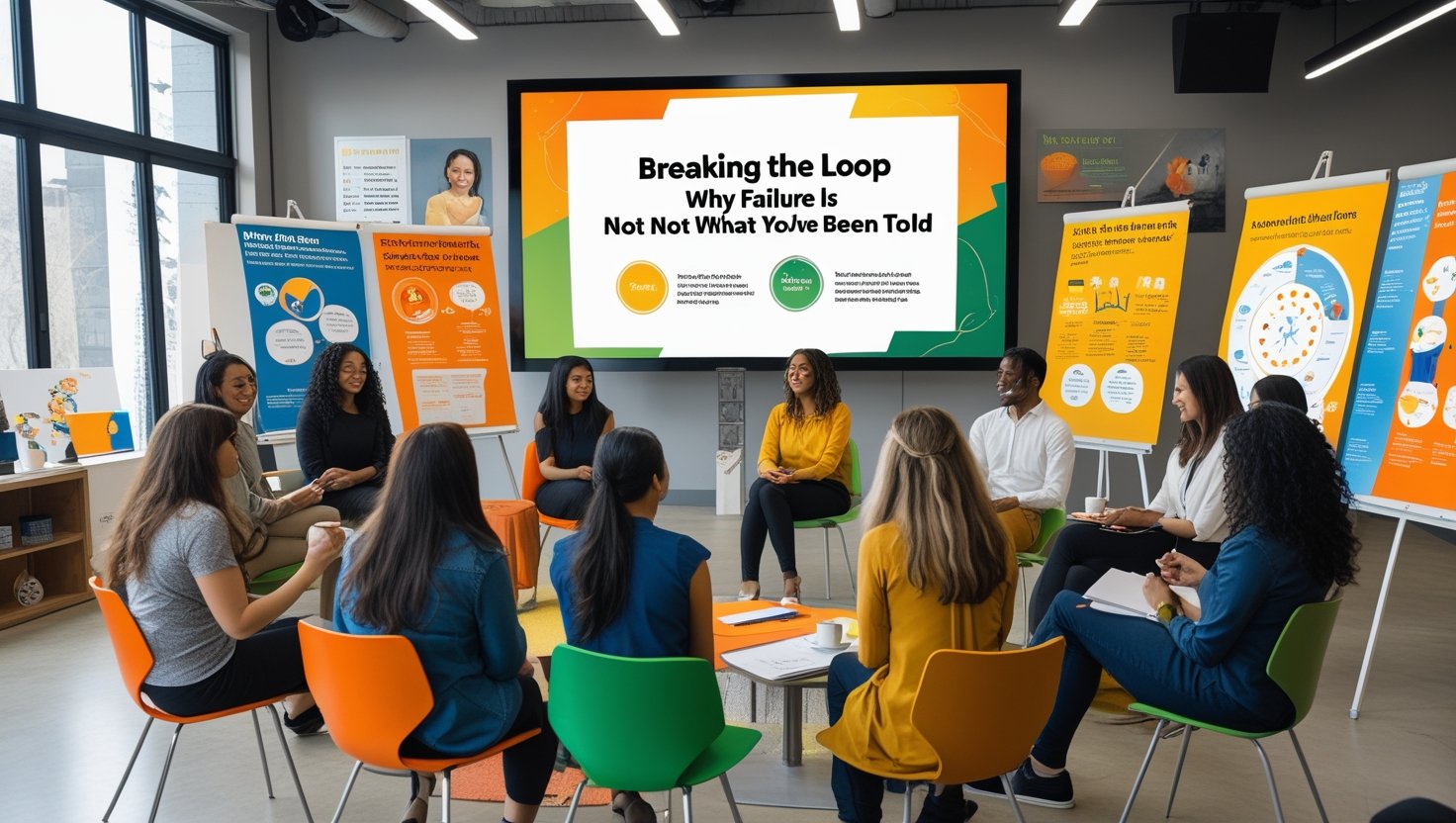
From the moment we enter school, we’re taught that failure is the ultimate enemy. Don’t fail your exams. Don’t fail to meet expectations. Don’t fail to get the job, the degree, the rank. It doesn’t take long before this fear becomes a permanent part of our identity. But what if everything we’ve been told about failure is wrong?
In today’s world, especially in high-pressure education systems like India, failure is not just feared it’s misunderstood. It’s weaponized. It’s commercialized. There’s an entire industry, from coaching centers to motivational speakers, built around the fear of failure. They tell us that if we fail, we are to blame. That we didn’t try hard enough. That we weren’t worthy.
This blog is here to challenge that narrative and to offer a new way of seeing failure: not as an end, but as part of the journey.
The Most Abused Word in the Dictionary:
Failure is perhaps one of the most overused and abused words in modern life. We use it casually, and often cruelly, to label people who didn’t get what they were aiming for. Didn’t pass an exam? Failure. Didn’t get into a top university? Failure. Didn’t land a dream job? Failure.
But here’s the truth: not getting what you want is not the same as failing.
Let’s take an example. Imagine 36 lakh people apply for SSC CGL. There are only around 17,000 vacancies. That means even if you worked hard, studied late nights, and sacrificed everything, the mathematical chances are still against you. More than 95% of applicants won’t be selected. Does that make them all failures? Of course not. It makes them human.
Failure, when viewed through the lens of harsh finality, is deeply unfair. Because it ignores the process, the effort, the growth, the learning, and the individual context. It tries to fit everyone into a binary: success or failure. And life doesn’t work like that.
Why the System Wants You to Feel Like a Failure:
There’s a reason this toxic definition of failure is so widespread: it benefits the system. When people see themselves as failures, they become easy to control. They spend more money on coaching classes, motivational books, and prep material. They remain stuck in a loop of “try-fail-blame-repeat.”
The motivational industry thrives on this loop. It tells you, “You failed because you didn’t work hard enough. Try again. Buy this course. Watch this video.” And people keep coming back, not because they’re lazy or foolish, but because they’ve been convinced that success is just one more try away.
This system doesn’t care about your mental health, your financial situation, or your dreams. It just wants you to stay inside the race, even if you no longer remember why you joined in the first place.
Defining Failure as a Process:
So, how should we see failure?
The answer lies in redefining it as a process, not a verdict.
Think about where you started. What did you know back then? What skills did you have? What fears held you back? And now, after walking some distance, even if you didn’t reach the final goal, are you stronger? Smarter? More resilient?
If the answer is yes, then how can that be a failure?
The truth is that every major life journey, whether it’s preparing for an exam, starting a business, learning a craft, or even working through a relationship, is full of stops and turns. You win some steps, lose others, and grow through all of it. The growth is the point. The destination is just one possible outcome.
Life is Not a Straight Line:
One of the biggest myths we believe is that life follows a linear path:
Study hard → Get into a top college → Land a secure job → Live happily ever after.
But in reality, life is anything but linear. You might start studying for UPSC and end up discovering your passion for writing. You might not clear the IIT, but go on to build a successful tech startup. You might fail in business but find meaning in teaching others.
The problem is, when you expect life to move in a straight line, any deviation feels like failure. But it’s not. It’s just a different path.
And often, that “different path” is where real self-discovery happens. That’s where people find their real passions, strengths, and joy. But if you’re stuck judging your life through a narrow lens, you’ll miss it and call it failure.
When Success Isn’t Enough:
Another shocking truth is that even those who “succeed” often don’t feel successful. A student who cleared JE Mains but failed to make it into IIT feels like a failure, despite reaching NIT. A civil servant in a top job keeps appearing for exams, hoping to “upgrade” to a better post, because they don’t feel “done.”
This happens because we’ve been trained to equate success with reaching the top, not with progress or satisfaction. And since there’s always a higher step, no one ever really feels they’ve made it.
That’s how the failure loop traps even the successful by moving the goalpost further every time.
The Mental Health Crisis Behind the Numbers:
Let’s talk about the toll this system takes. Anxiety. Depression. Self-doubt. Loss of identity. Suicidal thoughts. These aren’t side effects. They are direct results of a society that judges people only by outcomes, not journeys.
When a person ties their self-worth to a single result, a roll number on a PDF, a cut-off score, a promotion letter, any setback feels like a personal attack. Not just a career disappointment, but a blow to their identity.
And the worst part? They often suffer in silence, because they’ve been told failure is shameful. They’ve been told they’re alone in it. But they’re not. Millions are struggling silently under the weight of expectations they never even chose.
The Importance of Introspection and Plan B:
So, what can you do?
Start with introspection. Ask yourself:
Is this dream even mine?
Do I want what I’m chasing?
Is there another path I’ve ignored?
Second, always have a Plan B. Not because you don’t believe in yourself, but because life is unpredictable. Having options isn’t weakness it’s wisdom. It gives you emotional breathing room. It protects your dignity. It allows you to pivot without shame.
And third, surround yourself with real voices, not just loud ones. Look for mentors who speak with honesty, not hype. Talk to people who’ve struggled, failed, and changed paths, not just those who won. Learn the full story.
Conclusion:
Here’s what no motivational video will tell you:
You can do everything right and still not win, and that doesn’t make you a failure.
You can change your mind, switch careers, take breaks, and still not be a failure.
You can fall behind, take longer, go sideways and still not be a failure.
Failure is not the opposite of success. It’s not even an obstacle to success. It’s part of the same road.
The only real failure is allowing others to define your worth, to let the world tell you who you are and what you should be.
So break the loop. Stop measuring your life by cut-offs, rankings, and titles. Start measuring it by growth, clarity, joy, and peace. That’s not just a better way to live, it’s the only way to live free.
FAQs:
Q1: Why is failure treated as something shameful in our society
Failure is treated as shameful because we are raised in a system where results matter more than growth where marks ranks and job titles decide our value and when someone does not meet those expectations they are labeled as weak or lazy even though their effort and learning are ignored completely
Q2: What is wrong with the current definition of failure
The current definition of failure is very narrow and unfair it only sees success as a final outcome and ignores the journey the hard work and the personal challenges faced along the way it creates a black and white world where you are either a winner or a loser and that is not how real life works
Q3: How does the system benefit from making people feel like failures
When people see themselves as failures they become easy to manipulate they keep spending money on coaching classes videos books and apps in the hope of getting success next time the system earns more and keeps them stuck in a never ending loop of trying and blaming themselves again and again
Q4: Can someone feel like a failure even after achieving success
Yes many people who clear top exams or get high paying jobs still feel empty or lost because they were chasing goals they never truly wanted or they feel pressure to achieve even more this shows that real success is not about titles but about meaning satisfaction and peace of mind
Q5: What should we really learn from failure
We should learn that failure is just a step in the process of growth it teaches us where we are strong and where we need to improve it helps us discover new paths and develop resilience the key is to stop fearing it and start understanding it as part of the bigger picture of life